- Role
- Founder & CEO
- Years
- 2019 – Present
- Field
- Hardware · Readiness equipment
- Scope
- Brand and creative direction, product architecture, industrial design direction, manufacturing, supply chain, digital, go-to-market
Rhino Rdy
A readiness equipment brand, built as one system.
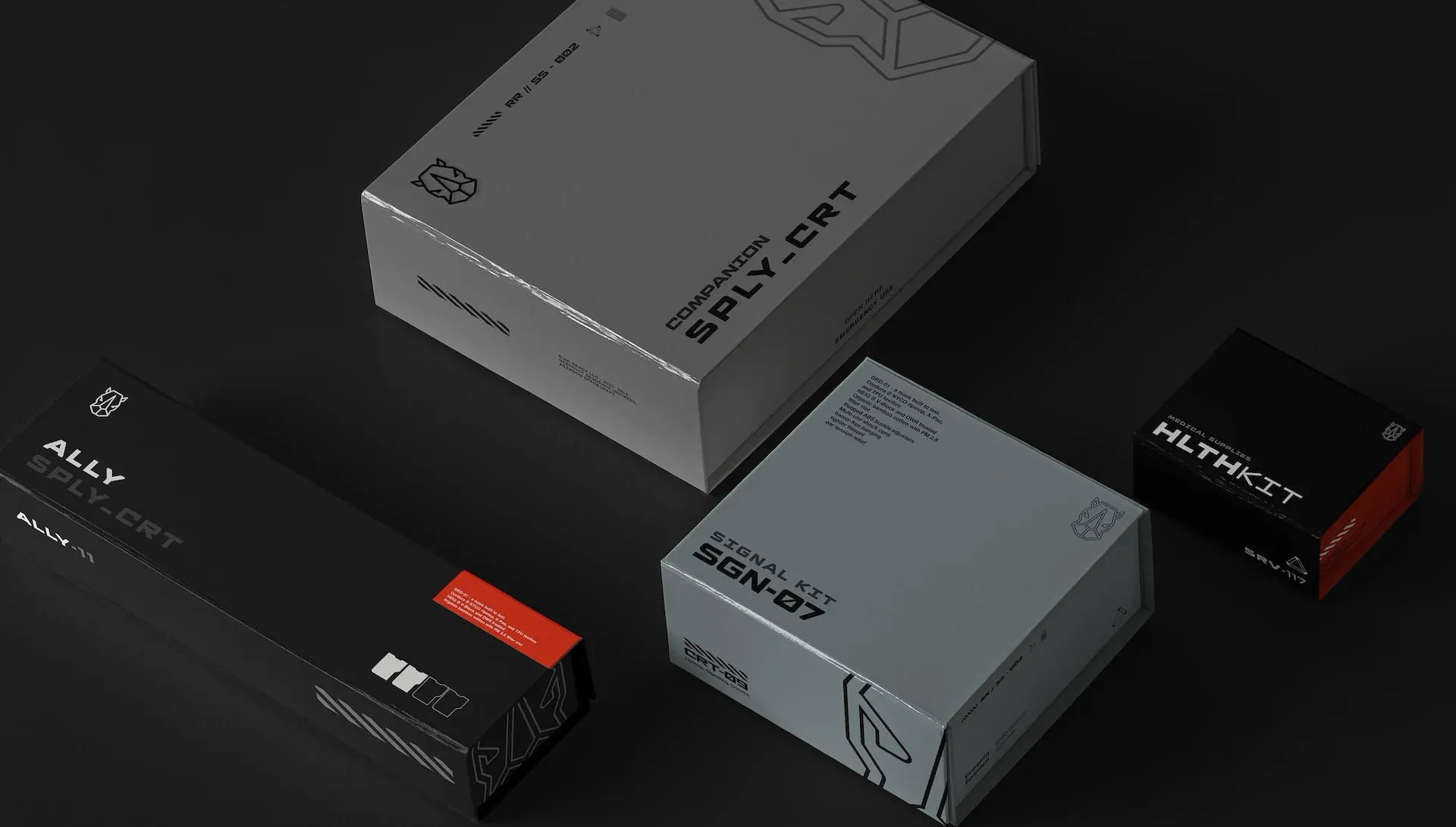
Seven years taking Rhino Rdy from first sketch to a modular hardware system and a brand to match. More than 100 products developed, manufacturing across five countries, and one architecture and visual language that ties four product lines together. I lead brand, product, manufacturing and go-to-market.
One system, not a catalogue
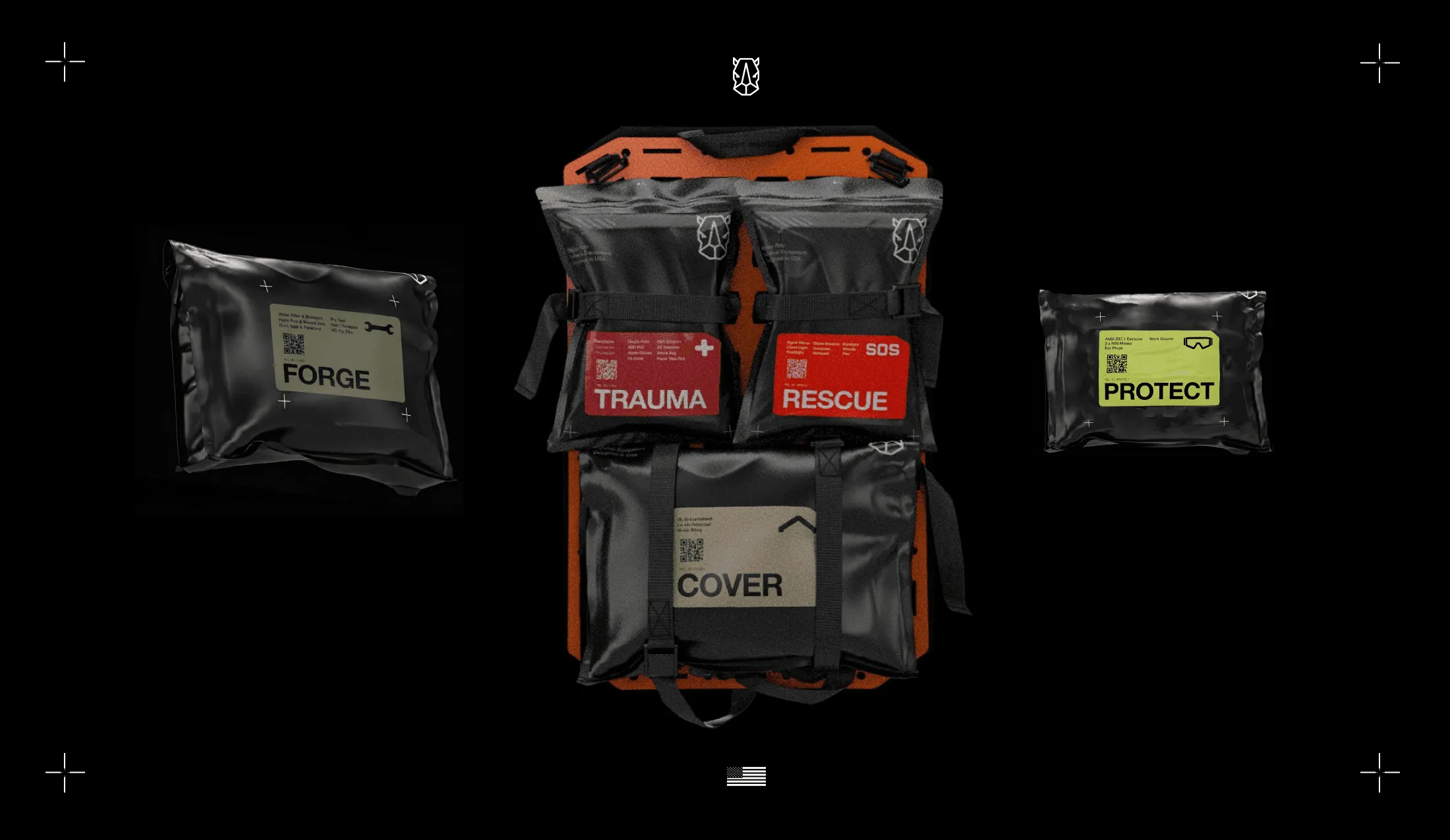
Preparedness gear is usually sold as a pile: a bag, a list, a headcount. I rebuilt the company around a single interoperable architecture instead, unifying four product lines (Core, Hydra, Sentry and Fury) so the visual language and the mechanical interfaces match across all of them.
At the centre is the Core-01: a carrier sleeve, a rigid HDPE panel and five sealed modules (Trauma, Rescue, Cover, Forge and Protect) that slide into any pack with an 11 × 18 inch sleeve. The packs (Hydra 25 L, Sentry 35 L, Fury 45 L) carry it; the Core stays the same every time. You buy one for each place you need to be ready, not for each person.
One language
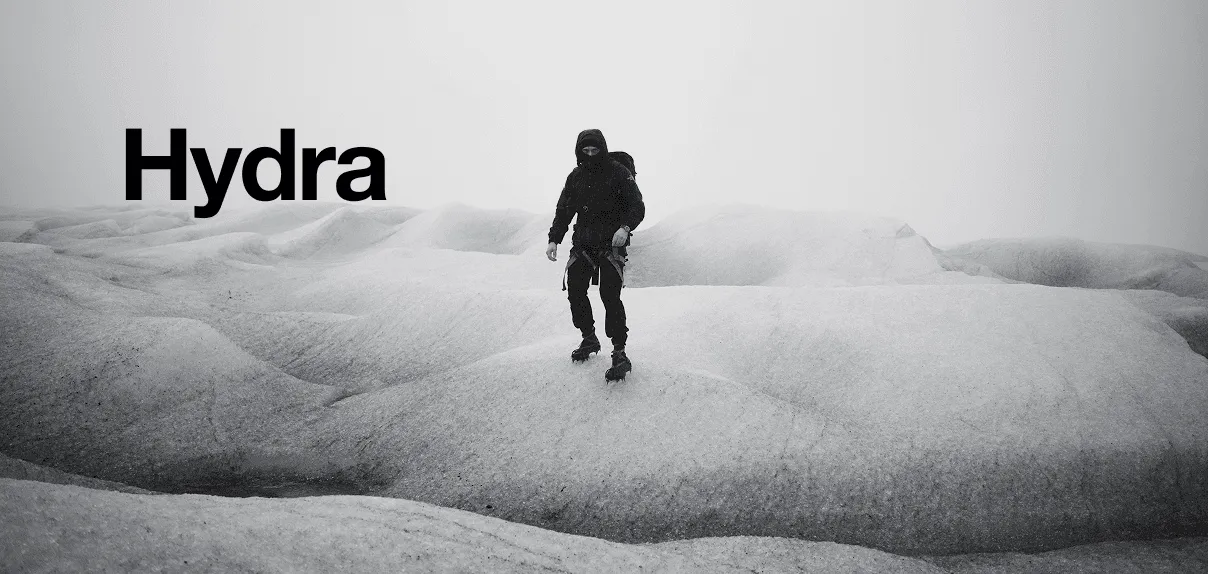
The same rules run from the logo to the buckle. One type system, black with a single signal orange, and a photographic language drawn from the places we test, so a module, a box, a product page and a film all read as the same company. I set those rules and hold every touchpoint to them: identity, packaging, storefront, campaign and the product itself. Coherence is the brand; the logo is the least of it.
Concept to factory floor
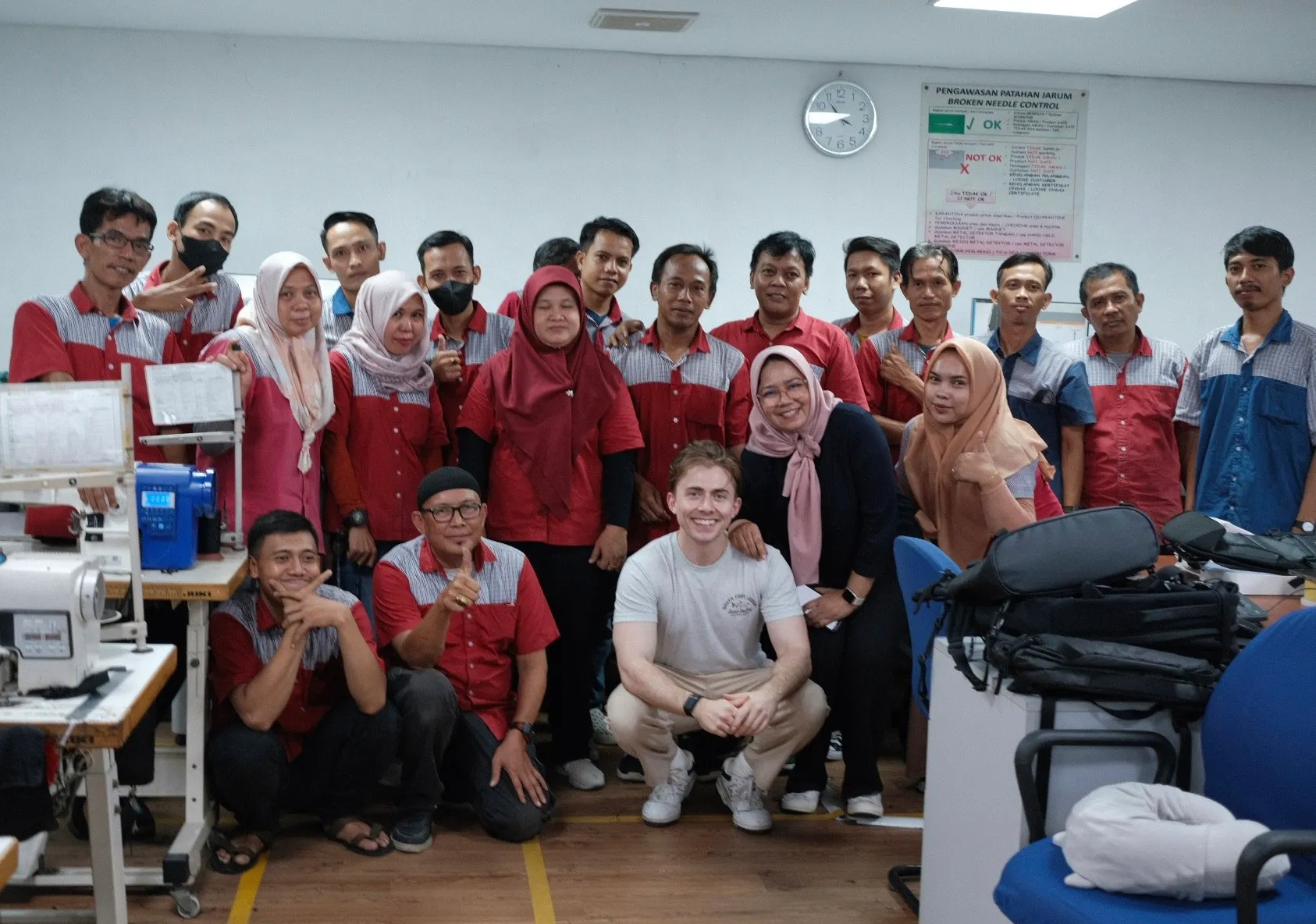
I built a vertically integrated supply chain from zero, aligning industrial design with global logistics so that loose concept art became strict design-for-manufacture protocols through high-fidelity validation loops. In practice that has meant months in development rooms a few steps from the production line, sample rooms where every seam is argued over, and partners across five countries.
The standard is simple to state and hard to hold: nothing ships that will not hold up in the conditions it is built for. Modules are heat-sealed, the panel is rigid, and every component is chosen for decades, not seasons.
The operating system underneath
The craft a customer sees is a byproduct of systems they never do. I engineered a custom PLM on Airtable automations to track complex bills of materials and critical-path timelines, replacing scattered threads with one base the whole team works from.
More recently I build our internal tools myself, with AI as a working partner: an inventory and operations ledger, a storefront rebuilt from the theme up, and a 3D scan pipeline that turns our products and the places we test them into the brand’s visual language.
Launch
I wrote the narrative and set the visual strategy that moved the product from commodity gear to a category of its own, then ran the launch: film and photography on location in Iceland, packaging, campaign and storefront. The Core-01 went live on Kickstarter on January 20, 2026, the public test of a thesis seven years in the making: that people will buy readiness as certainty, not fear.